
Gene therapy is an innovative medical approach to help treat disease by addressing genetic issues. It often involves introducing a working copy of a gene to replace or supplement a defective copy that causes disease.



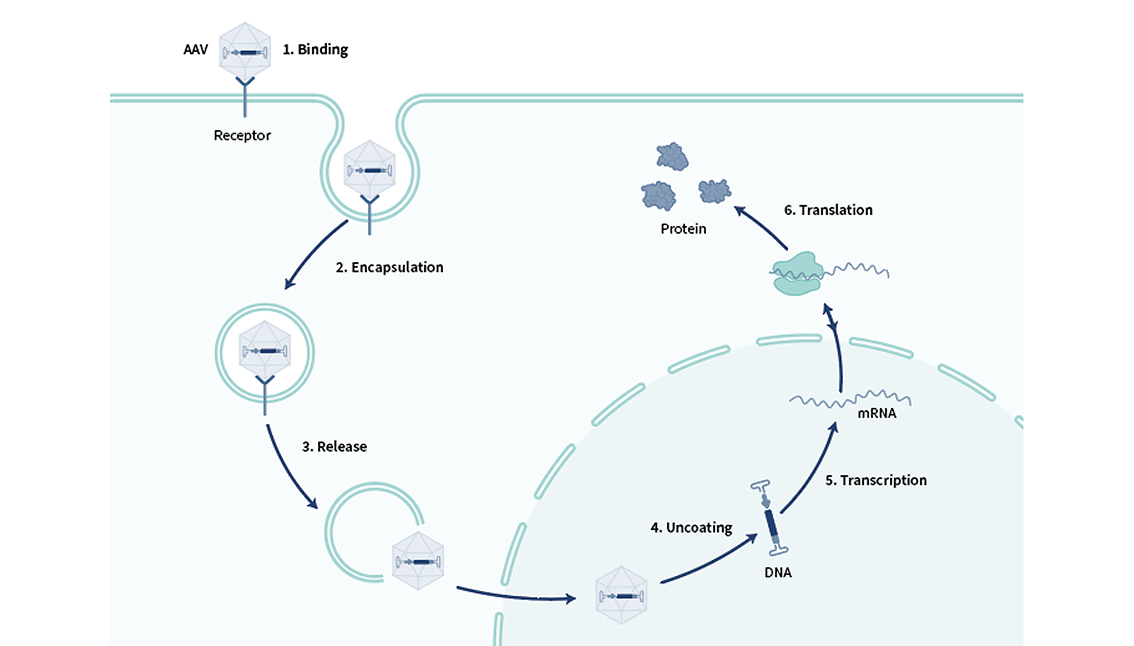
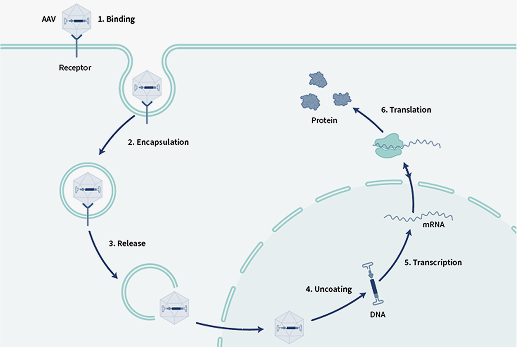
Gene therapy involves delivering genetic material to cells, often using a specialized carrier. Viruses are frequently used as carriers for gene therapies because of their natural ability to transport genetic material into cells. Viruses are modified in the laboratory to ensure they do not cause disease when used in humans.iii For Hunter syndrome, the investigational therapy uses a viral carrier to deliver a functional copy of the IDS gene to cells to the central nervous system.iv

We go beyond symptom management, providing patients with potentially disease-modifying
treatment options that could improve and extend quality time with loved ones.

Hunter syndrome, also known as mucopolysac charidosis type II (MPS II), is a rare genetic condition that impacts many parts of the body.

Exon-skipping has the potential to treat Duchenne muscular dystrophy.

JAK1 inhibition is being developed to treat EGPA, a type of vasculitis.
i MedlinePlus. Genetic Disorders. Available at: https://medlineplus.gov/geneticdisorders.html. Accessed December 2025.
ii MedlinePlus. What is Gene Therapy? https://medlineplus.gov/genetics/understanding/therapy/genetherapy/. Updated October 5, 2023. Accessed December 2025.
iii MedlinePlus. How Does Gene Therapy Work? https://medlineplus.gov/genetics/understanding/therapy/procedures/. Updated October 5, 2025. Accessed December 2025.
iv Data on File.
v Wraith JE, Scarpa M, Beck M, et al. Mucopolysaccharidosis type II (Hunter syndrome): a clinical review and recommendations for treatment in the era of enzyme replacement therapy. Eur J Pediatr. 2008;167(3):267-277. doi:10.1007/s00431-007-0635-4.
vi MedlinePlus. Mucopolysaccharidosis type II. https://medlineplus.gov/genetics/condition/mucopolysaccharidosis-type-ii/. Updated October 5, 2023. Accessed December 2025.

